
Why Bike Owners in India Are Comparing Online Bike Selling and Local Dealers in 2026
Selling a bike in India today is not as simple as it used to be. In 2026, bike owners want a good resale price, quick payment, and peace of mind after the sale. This is why many people are confused about whether to sell a bike online or through a dealer.
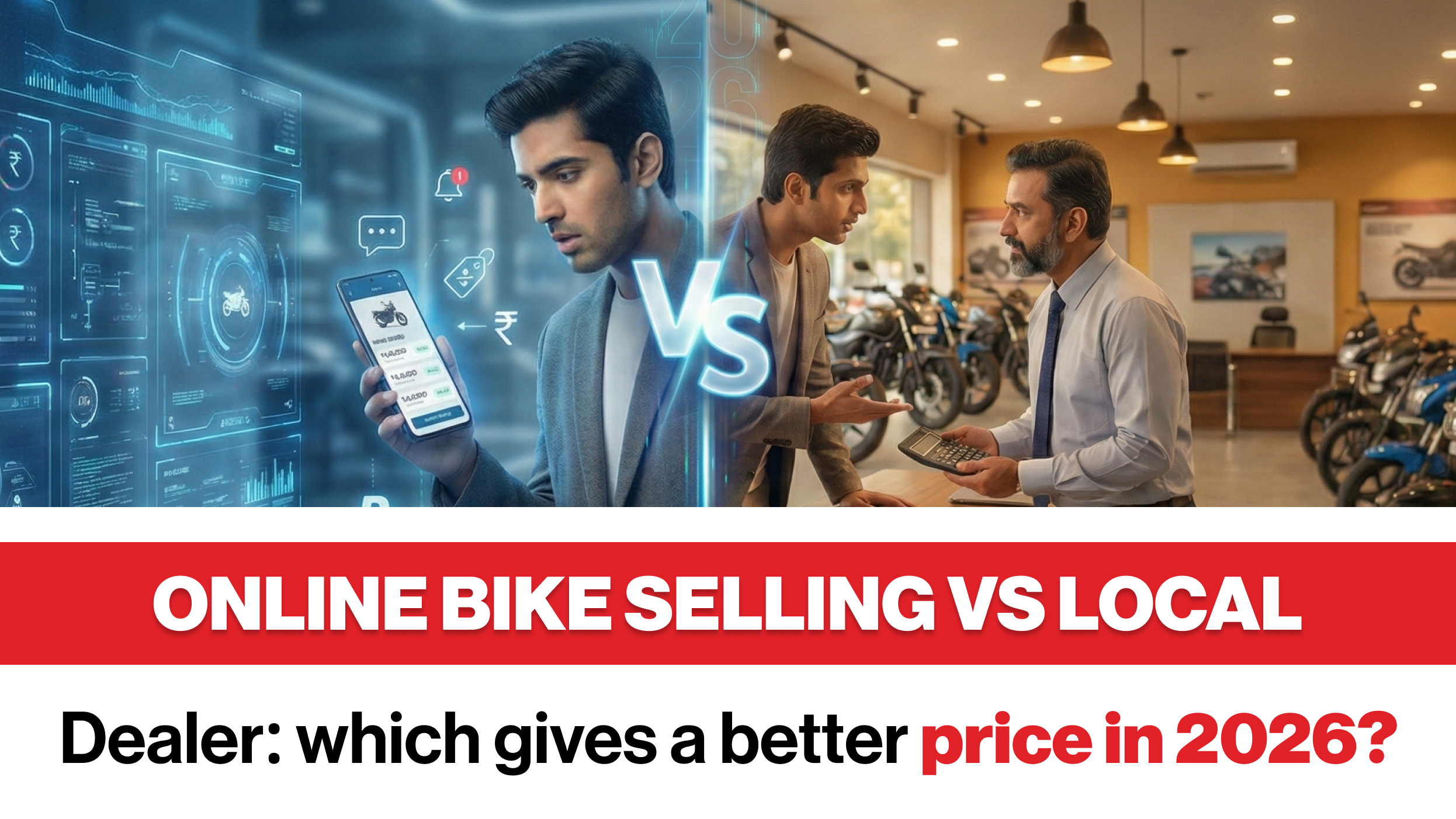
Local bike dealers have been the traditional choice, but they often offer lower prices and limited transparency. On the other hand, online bike selling platforms allow sellers to compare offers from multiple buyers, get their bike inspected at home, and complete RC transfer online without hassle. As a result, online selling is becoming a popular option in any bike resale comparison.
In this blog, we will compare online bike selling and local dealer selling to help you choose the best bike selling option in 2026 and understand why platforms like Speedioo are gaining trust across India.
How the Local Bike Dealer Selling Process Works
Selling a used bike can be done through multiple channels, but many owners still prefer traditional methods. One of the most commonly used options is local bike dealer selling process.In this approach, bike owners visit nearby dealers who purchase used two-wheelers and resell them at a profit.
This method has been followed for many years and continues to be common, particularly in semi-urban and rural areas, where local dealerships remain the primary resale option.
Step-by-Step Process to Sell Your Bike to a Local Dealer
Step 1: Visit the dealer
The bike owner takes the vehicle to one or more nearby dealers who deal in used two-wheelers.
Step 2: Vehicle inspection
The dealer evaluates the bike’s overall condition, age, mileage, service history, and supporting documents.
Step 3: Price quotation
Based on the inspection, the dealer offers a purchase price.
Step 4: Deal finalisation and payment
If the seller agrees to the quoted price, the bike and documents are handed over. In some cases, payment is made immediately, while in others it may be delayed until the dealer resells the bike.
Step 5: RC transfer process
Dealers usually ensure that the Registration Certificate (RC) transfer will be completed later. However, this process can take time and may require repeated follow-ups from the seller.
Typical Dealer Pricing Method
Local dealers typically follow a margin-based pricing model. Since they need to account for repair costs, refurbishment, inventory holding, and resale margins, the price offered is usually 20–35% lower than the bike’s actual market value.
Additionally, because there is no direct buyer competition, pricing depends heavily on the seller’s urgency and negotiation skills rather than real-time market demand. As a result, sellers often end up accepting a lower price in exchange for convenience.
In today’s digital age, selling your bike online has become one of the easiest and most profitable options. Unlike traditional dealers, online platforms connect you with multiple verified buyers, use technology to set fair prices, and handle the entire process securely.
What Is an Online Bike Selling Platform and How Does It Work?
In today’s digital age, selling your bike online has become one of the easiest and most profitable options.
An online bike-selling platform is a digital marketplace that helps bike owners sell their used bikes easily and securely.
Instead of visiting multiple dealers, sellers can complete the entire process online. These platforms use technology to analyze market demand, offer fair pricing, and manage the full selling process from start to finish.
How Online Bike Selling Platforms Work in India (Step-by-Step Guide)
Online bike selling platforms like Speedioo are designed to make the resale process fast, transparent, and hassle-free. Unlike traditional methods that require visiting multiple dealers, sellers can complete the entire journey from the comfort of their home.
Step 1: Enter Bike Details Online
The process begins by visiting the Speedioo website. Once you are on the page, you can quickly scan the QR code or fill out the form. You need to only enter basic information such as the bike’s brand, model, manufacturing year and mileage.
Step 2: Schedule a Doorstep Inspection
Further, a doorstep inspection is arranged at a time convenient for the seller. During the inspection, the bike’s physical condition and documents are verified to ensure accuracy.
Step 3: Get an Instant Price Estimate
Using real-time market data, Speedioo offers an estimate for your bike based on the bike’s overall condition. This gives the seller a fair idea of the bike’s current market value before proceeding further.
Step 4: Instant Online Payment and Pickup
Once the inspection is done and if everything looks good, the team will process the payment quickly. Within 30 minutes, the seller will get the payment reflected in their bank account. The team will further complete the entire documentation process and pick up the bike. The entire process is completed within 2 hours.
Online bike-selling platforms attract a diverse pool of professional buyers, including authorised dealers, large-scale resellers, fleet operators, and exporters.
Because multiple buyers compete for each bike, sellers benefit from higher demand and transparent pricing. This competitive environment often results in a better resale value compared to traditional methods, where pricing is controlled by a single dealer.
Pros and Cons of Selling Your Bike to a Local Dealer
Selling your bike to a local dealer is one of the most common and traditional ways to resell a two-wheeler. Many people choose this option because it feels quick, familiar, and easy.
However, like any other method, it has both benefits and drawbacks that are important to understand the local dealer pros and cons.
Advantages of Local Dealers
One of the biggest advantages of selling your bike to a local dealer is quick payment. In many cases, you get cash or money in your account on the same day.
The process is also very simple. You don’t need to use apps, sign up online, or understand any digital steps. You just visit the dealer, show your bike, and get a price.
Furthermore, local dealers are usually nearby and familiar, which feels comfortable for people who prefer talking face-to-face and closing the deal in person.
Disadvantages of Local Dealers
The biggest disadvantage of selling your bike to a local dealer is that you usually get a lower price. Dealers need to make a profit, so they often offer less than the bike’s actual market value, especially when compared to online platforms.
Another issue is RC transfer delays. Many dealers say they will handle it later, but if it’s delayed or not done properly, you could face legal or traffic problems in the future.
Sometimes, dealers also reduce the price at the last moment by adding last-minute hidden charges or cutting the price after inspection.
Since you are selling to only one dealer, there’s no competition, which means you don’t really get the best possible price for your bike.
Selling through a local dealer can be quick and convenient, especially if you need money urgently. However, if you want to get the best price along with proper paperwork, it’s worth comparing this option with online bike selling platforms before making a decision.
Pros and Cons of Selling Your Bike Online in 2026
Selling your bike online has become very popular in recent years, especially among young riders and first-time sellers. Online platforms like Speedioo focus on making the process easy, transparent, and safer than traditional methods.
Still, there are both advantages and a few limitations to keep in mind. Here are some online bike selling pros and cons:
Advantages of Online Platforms
Fair and transparent pricing
Online platforms like Speedioo use market data to calculate the bike’s value. This means the price is based on real demand, so sellers can clearly understand how their bike is priced.
Complete and secure RC transfer.
Online platforms like Speedioo manage the entire RC transfer process from start to finish. This reduces legal risk and removes the need for repeated RTO visits or follow-ups.
Doorstep inspection and pickup
The bike is inspected and picked up directly from the seller’s location. This results in saving time, travel, and effort.
Safe and reliable payment
Payments are processed securely and transferred directly to the seller’s bank account, reducing the risk of fraud or delayed payments.
No hidden charges
Digital platforms like Speedioo follow a transparent pricing model with no hidden fees or last-minute deductions.
Hassle-free selling experience
From inspection and bidding to documentation and pickup, the entire process is handled by the platform, making bike selling simple and stress-free.
Online Bike Selling vs Local Dealer: Price Comparison in 2026
When selling a used bike, price is usually the biggest deciding factor. No matter how easy the process looks, most sellers want a clear answer to one question first: How much money will I actually get?This is where the bike resale price comparison comes in.
How Local Dealers Decide Your Bike’s Price
Local bike dealers usually decide the price based on their resale margin, expected repair or refurbishment costs, and local demand.
Since the dealer is the only buyer in the conversation, the seller has very little bargaining power. In many cases, the final price depends more on how urgently the seller wants to sell than on the bike’s actual market value.
Because of this, sellers often accept a lower price just to close the deal quickly.
How Online Platforms Decide Your Bike’s Price
On the other hand, online platforms like Speedioo follow a transparent, market-driven pricing system. The process begins with a data-based price estimate that considers the bike’s model, age, condition, and demand in the seller’s city.
After the inspection, the team completes the payment and documentation formalities. Once the payment is done, the bike is picked up.
This helps the buyer to the real market value and usually results in a fairer and higher price for the seller.
A Simple Price Comparison Example
Online Bike Selling vs Local Dealers: Real Price Comparison
To understand the difference, let us see a common example.
To put this into perspective, consider a common scenario. A five-year-old commuter bike might receive an offer of around ₹38,000 from a local dealer. The same bike, when sold through Speedioo, could get an offer around ₹47,000.
That’s a difference of ₹9,000 — simply by choosing an online platform, the seller can get the best value for the bike.
Time and Convenience Comparison: Online vs Dealer Bike Selling
Which Method Saves More Time — Dealer or Online Bike Selling?
Apart from price, time and convenience play a big role when choosing how to sell a bike. While both local dealers and online platforms promise to sell the bike fast, the actual experience can be quite different.
Time Required by Local Dealers
Local dealers may offer quick cash, but the overall process is not always as fast as it seems. Sellers often need to visit the dealer multiple times for inspection, negotiation, and paperwork.
In many cases, the RC transfer is delayed and can take weeks or may not be completed on time. This means the seller stays legally responsible for the bike longer than expected, reducing convenience and peace of mind.
Time Required by Online Platforms
Online platforms like Speedioo are designed to save time and effort. Sellers receive an instant price estimate online, followed by a doorstep inspection.
Once the inspection is completed, payment is processed securely, and documentation, including RC transfer, is handled by the team. The entire process is structured, predictable, and far more convenient, with no repeated visits or follow-ups required.
Safety and Legal Risk Comparison: Selling Online vs Local Dealer
Is Selling Your Bike Online Safer Than Through a Dealer?
When selling a used bike, safety and legal responsibility are often overlooked. However, choosing the wrong selling method can expose sellers to unnecessary risks long after the bike has changed hands.
Risks with Selling Through Local Dealers
Selling a bike through a local dealer can carry certain risks. In many cases, the RC transfer is delayed or left incomplete, which means the bike still may remain legally linked to the seller. This can result in liability for future accidents, traffic fines, or misuse of the vehicle.
Cash payments are another concern. Since many transactions are done in cash without proper documentation, sellers may lack clear payment proof, increasing financial and legal uncertainty.
Safety Features of Online Platforms
An online platform is built to offer a safer and more transparent selling experience. The platform ensures RC transfer online is completed properly, reducing the risk of future legal issues.
Which Is the Best Option to Sell Your Bike in 2026?
Here’s quick information which will help you decide the best bike selling option, based on what matters most when selling your bike.
For the Best Resale Price
Online platforms use data-driven pricing and allow multiple buyers to compete, which usually results in a higher and more accurate market value. On the other hand, local dealers set prices based on their resale margins, which often leads to lower payouts.
Winner: Online bike-selling platforms
For Speed and Process Clarity
Online platforms offer, scheduled inspections,instant price estimates and clear timelines, making the process structured and predictable from start to finish. While local dealers may offer quick cash, this often requires multiple visits and provides unclear timelines for paperwork and RC transfer.
Winner: Online bike-selling platforms
For Legal Safety
Online platforms ensure proper RC transfer and maintain digital records. This protects sellers from future fines, legal issues, or ownership risks. But local dealers may delay or skip RC transfer, which can leave legal responsibility with the seller.
Winner: Online bike-selling platforms
For Hassle-Free Experience
Online platforms like Speedioo provide instant doorstep inspection and pickup, secure digital payments, and transparent pricing. On the other hand, Local dealers involve multiple physical visits, price negotiations, and repeated follow-ups for documentation. This can make the process challenging and not seller-friendly.
Winner: Online bike-selling platforms
If your goal is better pricing, clear timelines, legal safety, and a stress-free experience, online bike selling platforms clearly come out on top in 2026.
Why Speedioo Is a Better Alternative to Local Bike Dealers in 2026
Speedioo offers a smarter and more reliable way to sell your bike compared to traditional local dealers. Speedioo bike selling platform is designed to maximise value, ensure safety, and deliver complete convenience.
Higher Buyer Competition
Your bike is open to multiple verified buyers who place competitive bids. This buyer competition helps drive up the resale value and ensures you receive a price closer to the actual market rate.
End-to-End RC Transfer
Speedioo manages the complete RC transfer process from start to finish. Legal ownership is transferred seamlessly, giving you peace of mind and protecting you from future liabilities.
Instant Secure Payment System
Payments are transferred directly to your bank account through secure digital channels. This removes the risks associated with cash transactions and ensures full payment transparency.
Free Doorstep Service
From inspection and pickup to paperwork, everything is completed at your location and at a time that suits you, eliminating the need for dealer visits or repeated follow-ups.
Why Speedioo Is Better Than Local Dealers
Selling your bike with Speedioo is fast, simple, and completely hassle-free. Our streamlined process is designed to save you time, remove uncertainty, and help you get the best possible value for your bike.
Tell Us About Your Bike
Share your bike details using our quick “Sell Now” form, by scanning the Speedioo QR code, or by simply giving us a call. The process takes less than a minute and requires minimal information.
Free Home Inspection
If you’re satisfied with the quote, our team arranges a free doorstep inspection at your preferred location and time. We verify the bike’s condition and documents quickly and professionally.
Get an Instant Quote
Based on the details you provide, we offer a fair and transparent price upfront. There’s no guesswork, no negotiation pressure, and no hidden charges at any stage.
Instant Online Payment & Pickup
Once everything is approved, we complete the documentation, transfer the payment online instantly, and pick up the bike. This is done within 30 minutes, making the entire experience smooth and stress-free.
Final Comparison: Online Bike Selling vs Local Dealers 2026
To make the decision easier, here’s a quick side-by-side comparison of selling your bike through online vs dealer. This summary highlights the key differences across pricing, speed, safety, and convenience.
Factor | Local Dealer | Online Platform |
Price | Lower (around 20–30% below market) | Higher due to competitive bidding |
Speed | Instant or same-day cash | Instant with secure digital transfer |
Legal Safety | RC transfer may be delayed or incomplete | Verified and fully managed digital RC transfer |
Convenience | Requires manual visits and follow-ups | Doorstep inspection, pickup, and paperwork |
Transparency | Price depends on negotiation | Clear, data-driven pricing with no hidden charges |
Sell Your Bike Online with Speedioo. Get Instant Payment Today
If you want the best price, fastest sale, and complete legal safety, Speedioo is the smarter choice.
Get an instant price, doorstep inspection, secure payment, and hassle-free RC transfer. all in one place.
Sell your bike online with Speedioo today.
Get the Best Price for Your Bike in Just 30 Minutes
Skip dealer negotiations. Get instant online payment, doorstep inspection, and secure RC transfer — all in one place.
Sell My Bike NowFrequently Asked Questions About Selling a Bike Online vs Dealer
Yes. Most local dealers quote prices below the actual market value so they can maintain resale margins and cover refurbishment costs.
Yes, online bike selling is safe when you use verified and reputable platforms. These platforms follow proper documentation, secure payment methods, and verified buyer processes.
Online platforms usually provide faster and more reliable payments, often within the same day or 30 minutes after inspection approval.
Online platforms manage the complete RC transfer process digitally, ensuring proper ownership transfer without seller follow-ups.
In many cases, yes. Local dealers may apply handling fees, paperwork charges, or last-minute deductions that reduce the final payout.
Online platforms provide access to a wider buyer network, including resellers and exporters, which increases demand even for older bikes.
Which option is better for selling older bikes?
Generally, you need the bike’s RC, a valid ID proof, an insurance copy (if available), and address proof.
Yes. Many online platforms assist with loan closure and guide sellers through the process before completing the sale.
Yes. Doorstep inspections are conducted by using standardised digital checklists to ensure fair evaluation and transparency.